
The Booming Hair Industry in South Africa
Market Size and Economic Contribution
The hair industry in South Africa generates billions in annual revenue, yet its scale often goes unnoticed. Salons, barbershops, and independent stylists form a sprawling network that employs tens of thousands of people. This sector feeds directly into retail, education, and even property markets!
The economic contribution extends beyond chair rentals. Product suppliers, equipment distributors, and training academies all depend on the steady pulse of daily appointments. A single hairdresser South Africa can stimulate local spending through wages, rent, and procurement. The influence reaches provinces like Gauteng and the Western Cape.
- Unlicensed operators add informal turnover that escapes official records.
- Export of hair extensions and accessories boosts trade numbers.
Market analysts note consistent growth, driven by population expansion and shifting grooming habits. I have seen this industry survive recessions that flattened other sectors. Its resilience proves a fundamental role for every hairdresser South Africa.
Key Hubs: Johannesburg, Cape Town, Durban
A hairdresser South Africa in Hillbrow learns more from street observation than from any training manual. Johannesburg’s inner-city density creates an intense apprenticeship culture, with Senegalese braiders and Somali barbers sharing techniques informally. Cape Town’s coastal economy supports a different pattern. Salon owners in Woodstock cater to tourists and remote workers, offering wash and style appointments that never appear in traditional schedules.
Durban’s humid climate demands specialised treatments for relaxed hair, driving demand for moisture-rich products and keratin repairs. Busy zones in all three cities share several characteristics:
- Peak hours run from 14:00 to 18:00, when workers arrive after office shifts.
- Weekend bookings require deposits to prevent no-shows.
- Rental chairs cost between R800 and R2,500 per month depending on location.
Each hub maintains its own price ceiling, but from my visits, I can confirm the willingness to pay for skilled hands remains constant across the metros.
Diversity of Salons: From Mobile Stylists to Luxury Establishments
Walk down any main road in South Africa and you will see three salons before the next robot! The industry runs on improvisation. A hairdresser South Africa might work from a rented chair in a busy plaza, or drive to clients with a foldable mirror in the boot.
Mobile stylists have turned WhatsApp statuses into booking systems. Luxury salons, meanwhile, offer marble counters and heated treatment beds. These two poles are not enemies. They serve different pockets and priorities. The middle layer includes:
- chain franchises with fixed price menus
- specialist braiding studios running on referrals
- home-based barbershops that open after five
What binds them all is the premium placed on personal reputation.
Cultural Significance of Hair in South African Communities
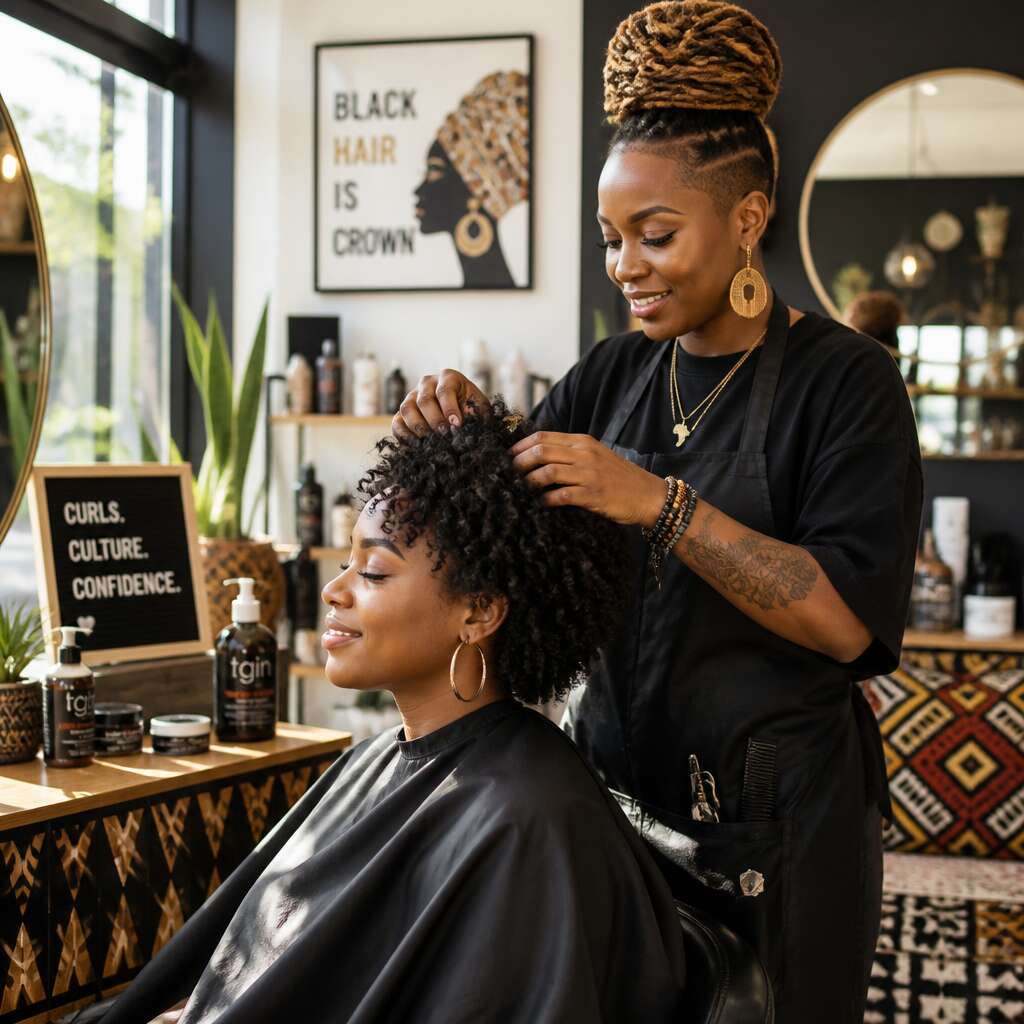
Hair in South Africa carries lineage. It speaks of clan, ceremony, and resilience. A hairdresser South Africa often serves as custodian of these stories, translating heritage into daily style. From beaded cornrows to crowned afros, each braid or twist holds meaning. The industry’s boom reflects this deep-rooted value. Africans spend on hair care because it defines identity, not vanity.
Salons operate as communal forums. News travels, advice flows, confidence is rebuilt. Communities trust their stylist with both their crown and secrets. That trust fuels repeat visits. The cultural weight turns an appointment into a ritual. That is why the sector thrives, even during economic strain. Hair remains non-negotiable. For any hairdresser South Africa, success depends on honoring these unseen threads.
Becoming a Professional Stylist in South Africa
Accredited Training Programs and Academies
Finding the right education is the difference between a stylist who merely cuts hair and one who builds a career. In South Africa, the path to professional legitimacy runs through accredited training programs. These are not elective workshops. They are structured pathways governed by the Services SETA and the South African Hairdressing Council. Without this foundational certification, a hairdresser South Africa cannot legally register in many provinces. It is a safeguard for clients and a passport for professionals.
Reputable academies blend theoretical anatomy with intensive practical modules. Students learn chemical formulations, colour theory, and sanitation protocols. Many institutions offer apprenticeships that extend beyond the classroom.
Accredited programs typically cover:
– Client consultation and scalp analysis
– Advanced cutting and styling techniques
– Salon business management fundamentals
These academies often have partnerships with international brands, offering exposure to global trends. Choosing a registered school is the first decisive move. The rest depends on your scissors and your persistence.
Apprenticeship and Mentorship Routes
A certificate proves you passed the test. An apprenticeship proves you can run a chair. For a hairdresser South Africa, the latter is what clients actually pay for. The salon floor demands speed, precision, and composure. Textbooks cannot teach you how to handle a nervous client or a botched home dye.
Mentorship fills that gap. Senior stylists pass down techniques that formal training misses. They correct your grip, your stance, your timing. Many salons across the country run structured apprenticeship programs with weekly assessments. A typical apprenticeship covers:
- Shampoo and conditioning protocols
- Assistant duties during colour services
- Reception and booking systems
The best apprentices stay humble. They watch, they ask, they repeat. Within two years, many are taking their own chairs.
Licensing Requirements Across Provinces
Licensing rules for a hairdresser South Africa often surprise newcomers. The country has no single national board; each province regulates the profession separately. The Western Cape requires registration with the Department of Economic Development and Tourism. Gauteng relies on municipal health certificates. KwaZulu-Natal mandates proof of accredited training before you can work independently.
For any hairdresser South Africa, these differences create practical problems. A stylist moving from Cape Town to Durban must reapply and pay fresh fees. The paperwork varies too. Some provinces demand a portfolio. Others ask for affidavits from old employers.
- A certified copy of your ID
- A valid SARS tax clearance
- Written proof of your apprenticeship hours
I have seen talented people stall for months because they missed one small requirement. Checking your local municipality’s website first saves real time.
Cost of Education and Financial Aid Options
Tuition for a hairdresser South Africa can consume a year’s salary before the first blow-dry. High-end academies charge between R35,000 and R70,000, while public institutions demand far less but often require a two-year wait. My own tuition at a City Bowl academy swallowed R48,000, yet the alumni network earned its keep.
- Services SETA learnerships pay a monthly stipend while you rotate through salons
- Private training providers offer instalment plans with a 10% deposit and steep interest
- Local beauty councils award merit bursaries to top students in township academies
Such funding rarely covers equipment. Expect to budget for shears, clippers, and a smock that does not embarrass you in front of clients. Ask about hidden costs before signing, and do not skip the kit fee!
Continuing Education and Specializations
The tools in your kit are static, but the craft itself refuses to stand still. A hairdresser South Africa who stops learning in 2024 is already outdated by 2026. This reality has reshaped how the most successful stylists approach their careers. They treat their education as a perpetual spiral, folding new techniques into their repertoire with every seasonal shift.
Specialization is the most direct path to raising your earning ceiling. Generalists are common, but a stylist who masters one discipline becomes the destination for that service. Consider the depth available:
– Weave and extension artistry, which requires a deep grasp of tension and scalp health
– Chemical straightening and relaxer reformation for specific hair textures
– Editorial and photographic styling, where the work lives beyond the salon chair
– Trichology, the study of scalp conditions, which opens a referral pipeline from dermatologists
The workshop circuit has expanded beyond the city centres, with masterclasses popping up in smaller towns. Online courses have also matured, offering recorded modules from international educators. However, the tactile nature of hair means physical practice remains irreplaceable. A hairdresser South Africa can watch a hundred videos on slicing techniques, but the muscle memory only forms when your fingers hold the shears over a live head.
Advanced certifications in colour chemistry, for instance, are the new battleground. Balayage is no longer a simple swish of the brush. It is a precise application of lightener, mapped against the client’s natural pigment distribution. Mastery in this area commands premium prices, and clients will travel far for it. The energetic landscape of the industry now rewards those who build a niche, not those who merely provide a service.
Current Trends and Techniques Dominating the Market
Natural Hair Movement and Protective Styles
Natural hair appointments now outnumber chemical treatments in many salons, a notable shift across the styling industry. Clients arrive with detailed routines, asking for stylists who respect their coils. A professional hairdresser South Africa must master hydration techniques and curl by curl cutting to retain shape.
Protective styles continue to dominate service menus. From knotless braids to faux locs, these looks offer practical length retention and creative expression. Installation demands precision; tension that is too tight can cause traction alopecia, while loose braids lead to frizz and early shedding.
Popular protective styles include:
- Knotless braids
- Faux locs
- Halo twists
Each style requires a different parting pattern and finish. The most sought after hairdresser South Africa understands scalp health, product buildup, and how to adjust for each client’s hair density.
Bold Color Transformations and Balayage Techniques
Bold color transformations now rival protective styles on salon menus. Clients ask for lived-in blondes, copper glazes, and deep burgundy tones. A hairdresser South Africa trusts must understand lightening on textured hair. Chemical damage is the enemy. Foil work alone is no longer enough.
Balayage techniques have evolved. Hand-painting creates softer regrowth lines. That means fewer salon visits and healthier ends. South African stylists adapt these methods to local humidity and sun exposure. Skilled practitioners combine ash tones with warm undertones. This avoids the muddy results of poor color work.
- Dimensional chocolate browns with caramel ribbons
- Firefly blonde with a subtle golden glow
- Copper penny shades with root shadowing
Each look demands a different approach to lift and tone. In my experience, a hairdresser South Africa must evaluate previous treatments and home care routines first. Professional judgment separates good color from great color.
Sustainable and Eco-Friendly Salon Practices
Professional color work is only part of the equation. The current market rewards salons that treat sustainability as a craft, not a slogan. A hairdresser South Africa now builds eco practices into daily routines. Waterless shampoo rituals and refillable color systems are trending. Load shedding pushed innovation. Solar powered salons are gaining ground across the country. Water conservation systems and low ammonia color lines appear in upmarket spaces.
Clients ask pointed questions about sourcing and disposal. They notice when stylists respond. The most visible shifts:
– Composted hair clippings
– Reusable capes and towels
– Refillable treatment bars
These elements shape salon menus as much as cut and color. The shift is practical. In my view, salons that adapt maintain steady clientele.
Tech Integration: Online Booking and Virtual Consultations
Clients now book a haircut while standing in a queue for coffee. The old phone call system fails that moment. I have watched clients abandon a booking after two rings. A hairdresser South Africa using online booking captures the decision instantly. Automated reminders cut no show rates. Waitlists fill cancellations without manual effort.
Virtual consultations go deeper than scheduling. By video, a stylist observes curl patterns and hair density in natural light. They ask about stress, water quality, and styling habits before tools touch the head. This changes the first appointment into a diagnostic session.
- Upload three photos of your hair from different angles
- Receive a suggested service plan within 24 hours
- Pay a deposit to lock in the reserved time
These steps seem mechanical, but they restore trust. A client knows what to expect. The stylist gains clarity. Both sides stop guessing.
Building a Successful Salon Business
Effective Marketing and Social Media Presence
Running a salon in South Africa demands sharp financial foresight. Every chair must generate revenue, and every product must turn a profit. Successful owners track stock, manage overheads, and understand their clientele’s spending rhythms. The hairdresser South Africa market rewards those who balance technical excellence with careful planning.
Social media presence extends the salon’s reach beyond the shop floor. Platforms like Instagram and TikTok serve as a visual record of a stylist’s evolving work. Sharing transformative images attracts clients who value specific aesthetics, while genuine replies to comments build local loyalty!
- Regular posts showcase current capabilities
- Client photos provide social proof
- Local hashtags connect nearby customers
Each salon must discover its own voice in this crowded creative field.
Client Retention and Loyalty Programs
A bustling salon floor can mask a fragile business. In the hairdresser South Africa market, a full appointment book means little if the same faces never return. Repeat clients drive the revenue that keeps a salon solvent.
I have watched salons lose momentum because they chased new clients while neglecting regulars. Loyalty programs work best when they feel personal. A punch card for every fifth visit, a birthday treatment, or a small discount on retail products after a chemical service keeps clients connected to their stylist.
- Successful salons reward referrals with complimentary deep conditioning treatments
- They track client preferences and consult notes after every visit
- Follow-up messages after colour services reinforce the relationship
Retention depends on consistency. Clients return when they trust the stylist and the atmosphere. A hairdresser South Africa that remembers names, preferences, and past conversations builds a loyal following that no marketing spend can replicate.
Hiring and Training a Reliable Team
A salon owner in Johannesburg once told me that hiring a stylist requires patience and a strong stomach. In the hairdresser South Africa landscape, reliable teams are built, not discovered. Training must cover technical skills and the subtle art of nodding while a client describes a haircut they saw on a blurry TikTok.
- Interview for attitude, then teach technique.
- Observe how they treat a cleaning cloth.
- Offer weekly sharpening sessions, both for shears and communication.
Without consistent training, your salon will see errors and complaints. Invest in people, or you will spend your days fixing avoidable mistakes.
Inventory Management and Product Recommendations
Inventory management determines whether a salon runs profitably or merely survives. For the hairdresser South Africa relies on, product stock holds cash that could otherwise fund a new chair or a training day. Track unit economics per product line. Observe which shampoos, treatments, and styling aids actually leave the building each month.
A simple reorder system prevents crisis moments. Set par levels for every item. When stock dips below the threshold, reorder automatically. Organize your range into three tiers:
– Everyday essentials: sulfate-free shampoos, conditioners, heat protectants.
– Premium indulgences: bond builders, luxury oils, scalp treatments.
– Niche specialties: grey coverage enhancers, curl-defining creams, scalp exfoliants.
Order from suppliers with reliable delivery windows. In South Africa, load shedding can disrupt cold chains, so verify backup plans. Rotate stock by expiry date. Train your team to recommend products that need moving instead of what is easiest to sell. A hairdresser South Africa trusts the system, and the profit margin follows.
Managing Operations and Appointment Scheduling
Appointment scheduling is where a salon’s operational discipline faces its daily test. A hairdresser South Africa depends on a fully booked chair, but a double booking can ricochet through the entire day. Use a system that shows buffer time between services. Colour corrections need longer slots than a trim. Build that reality into the calendar.
Managing operations means tracking no-show patterns and enforcing deposit policies when they creep upward. Keep the reception desk organised. A missed appointment carries an opportunity cost that walks out the door without paying. For smoother days, follow a few rules:
- Block 15 minutes between colour and cut appointments.
- Require deposits for weekend slots.
- Send automated reminders 24 hours ahead.
Challenges and Future Opportunities for Local Stylists
Economic Pressures and Rising Operational Costs
For any hairdresser South Africa, the current economic climate is a tightrope walk. The cost of premium colour lines and conditioning treatments has escalated sharply, while clients are delaying their next visit. This squeeze forces stylists to absorb price hikes or risk losing their clientele to cheaper, often informal, alternatives. In my experience, electricity bills and water restrictions add another layer of unpredictability to the monthly budget!
Rising operational costs are not simply about product. Rent in busy retail nodes remains exorbitant, and investing in proper sanitisation equipment is non-negotiable. However, this pressure also creates a space for collaboration over competition. Stylists can pool resources for shared marketing or bulk buying. Opportunities lie in transparent pricing models and bundling services to create tangible value, turning economic strain into a reason for loyalty rather than a loss.
Competition from Informal and Home-Based Salons
Every hairdresser South Africa contends with the spread of home-based operators. They charge R80 for a cut. No receipt. No visible formal training. No questions asked. Informal salons thrive in townships and suburban garages, capturing a massive chunk of budget-conscious clientele. This is not new, but it is accelerating as disposable income shrinks!
In my experience, the licensed stylist must sell what the garage cannot: consistency. Formal salons hold specific advantages in this contest:
1. Documented hygiene protocols and sanitation compliance.
2. Insurance coverage for accidents or allergic reactions.
3. Access to professional grade colour lines unavailable to casual operators.
Clients pay for peace of mind. Many will spend an extra R150 for that assurance. The hairdresser South Africa who builds a reputation for safety and reliability holds a clear edge. Informal competitors come and go, often undone by their own corner cutting.
Embracing Inclusivity and Serving Diverse Hair Types
South Africa’s hair landscape is changing. The demand for textured hair expertise has outpaced traditional training. A hairdresser South Africa who once specialised in chemical straightening now faces clients asking for curl preservation, scalp health, and protective styling.
The challenge is honest skill acquisition. Many local stylists trained on European product lines that neglected kinky and coily textures. Serving diverse hair types requires new knowledge and, crucially, new product ranges. Several opportunities are emerging for those willing to adapt:
- Specialised curl clinics operating inside established salons
- Partnerships with local black-owned product manufacturers
- Structured workshops on afro-textured hair care and scalp science
Stylists who invest in this education will hold a lasting advantage. Clients with textured hair often travel long distances for practitioners who truly understand their needs. The hairdresser South Africa who builds this expertise secures a loyal following that informal competitors cannot easily replicate.
Leveraging Tourism to Attract International Clients
International tourists rarely pack their styling tools. They land in Cape Town or Johannesburg expecting expertise, yet they often encounter a hairdresser South Africa who excels at local textures but stumbles on global trends. The challenge is bridging that gap. Tourists want familiarity, whether it is a Korean perm or a European blowout, and they want it fast.
For local stylists, this is an open door. Partner with boutique hotels, offer express services for safari stopovers, and learn to decode what foreign clients actually need. Social proof matters.
- Create Instagram Reels showing before-and-after transformations for diverse hair types.
- Offer concierge styling for cruise ship passengers.
A hairdresser South Africa who invests in multi-language product knowledge and cashless payment systems turns a one-time visitor into a recurring client. The future lies in being the memory tourists carry home, not in chasing trends.


0 Comments